
5 Biggest SIDS Risk Factors
Several thousand babies dies every year from Sudden Infant Death Syndrome, or SIDS. While doctors aren’t sure what directly causes SIDS, there are some factors that clearly stand out in a larger number of SIDS deaths. This leads experts like those at the American Academy of Pediatrics to believe that certain behaviors increase your baby’s likelihood of being affected. Here are five of the biggest SIDS risk factors.
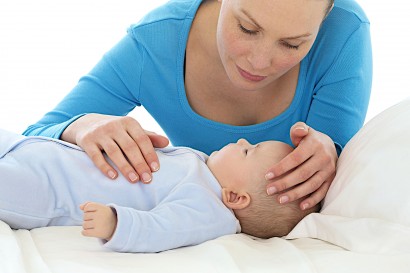 Sleeping on the stomach or side
Your baby’s sleeping position is by far the biggest risk factor for SIDS. In its ‘Task Force on Infant Sleep Position and SIDS,’ the American Academy of Pediatrics found that babies sleeping on their stomach were as much as 12 times more likely to be affected by SIDS than those sleeping on their backs. What’s more, studies across the world have shown that placing babies to sleep on their backs greatly reduces the incidence of SIDS.
Co-sleeping
There’s so much advice out there advocating for co-sleeping as a way to help your baby sleep through the night. The truth is, though, that co-sleeping can be a dangerous risk factor for SIDS. In a study published in Pediatrics, researchers found that between 2004 and 2012, nearly three quarters of deaths in babies under four months occurred in a bed-sharing situation. Not all of these were SIDS cases; some were cases of accidental smothering or the baby becoming trapped between the mattress and the wall. No matter what the cause of death, though, the numbers don’t lie: co-sleeping is a risk to your baby. There are many other safe alternatives out there, like co-sleeper bassinets that attach to the side of your bed and allow baby to sleep safely on her own.
Smoking before, during or after birth
According to the CDC, smoking during pregnancy increases a baby’s risk of SIDS, as does exposing a baby to secondhand smoke. Chemicals from secondhand smoke are believed to affect babies’ brains in a way that disturbs the regulation of their breathing. Additionally, babies who die of SIDS are found to have higher levels of nicotine and cotinine in their lungs than infants that die of other causes.
Loose bedding and other objects in the crib
While it may seem counterintuitive, soft, loose blankets and other items like stuffed animals can actually pose a danger to your baby. Bedding can become positioned over a baby’s head, and infants under one may not have developed the reflexes to free themselves if they’re lacking oxygen. Doctors believe this may play a contributing role in SIDS.
Being in the care of someone other than a parent
Approximately one in five SIDS deaths occur while the infant is in the care of someone other than a parent. For babies in group childcare, the SIDS rate is nearly double the norm. Of course you can’t be with your baby at all times, but you can take preventative measures by making sure all of your child’s caregivers are educated about SIDS and its risk factors.
Connect with other parents, ask questions and share advice by joining our free Facebook community, MonParents.