
The Science Behind a Baby’s Sleep
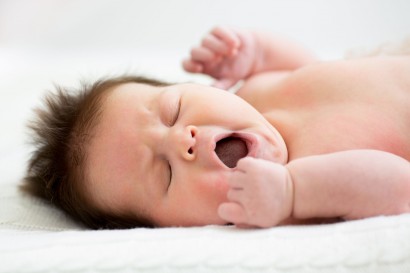
Your baby looks so peaceful while he’s sleeping, but there’s actually a whole lot of action going on behind the scenes! During the first year of your baby’s life, he’s developing faster and learning more new things than at any other point in his life. That’s why his sleep is so crucial to healthy development. So what’s really going on while your baby’s eyes are closed? Read on; we’ll explain.
 Sleep Cycles
You may have heard about sleep cycles before. It’s the pattern through which we drift in and out of deep sleep, sometimes sleeping heavily, others lightly. Adult sleep cycles last around 90 minutes. A baby’s sleep cycles, on the other hand, only last around 50 to 60 minutes. This explains why you may notice your baby begin to stir or squirm around after sleeping for an hour. His sleep cycle has come to an end, and there’s an increased chance he’ll wake up. As your baby is learning to sleep longer, you can help him transition from one cycle to the next by quietly soothing him, rubbing his back lightly and keeping light and sound to a minimum.
A Tool For Learning
Babies experience more periods of REM sleep than adults. REM stands for rapid eye movement; your eyes are actually moving under your eyelids! This is the time when you dream, toss and turn and decompress from all the thoughts you’ve had that day.
Scientists theorize that REM sleep is an important tool for learning. The brain uses it to help process the tons of information it acquired while awake (which explains why it’s sometimes helpful to “sleep on it!”). Therefore, babies’ increased levels of REM sleep are crucial to helping them learn new things and reach developmental milestones.
REM sleep, also called ‘active sleep,’ is a safer state of slumber for babies than deep sleep. During REM sleep, we’re more likely to wake up if we’re feeling overheated, stifled or otherwise uncomfortable. This is an important survival mechanism for babies. Because they spend more time in REM sleep, they are more likely to wake themselves up if they’re lacking oxygen or accidentally become covered by a blanket (for much more on safe sleep environments, refer to our Safe Sleep page).
As you can see, there’s much more to your baby’s sleep patterns than meets the eye. Did you learn something new? Share this article with other parents on Facebook or Twitter! Connect with other parents, ask questions and share advice by joining our free Facebook community, MonParents.